
This drug, which falls under the carbapenem antibiotic class, is used to treat bacterial infections, including infections of the skin and skin structure, bacterial meningitis, and severe nosocomial infections such pelvic, intraabdominal, and septicaemia infections. It works by preventing the formation of the bacterial cell wall, which eventually causes the bacterial cells to die.
This drug is used by injecting it directly into the vein by a healthcare provider. It comes as an injectable solution. The suggested intravenous dose, administered three times a day by steady infusion, is between 0.5 and 2 grams, or 10 and 40 mg/kg. Typical adverse effects of this drug include pain, nausea, bloating, fever, back pain, expansion of the abdomen, chills, and pelvic pain. It is recommended that you schedule an appointment with your physician as soon as possible to discuss missing a dosage and make sure the treatment plan is managed appropriately.
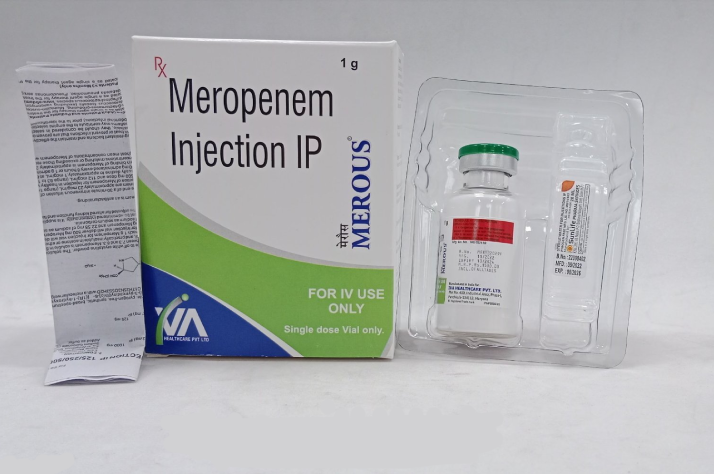
Notify your doctor right once if you have an allergy to meropenem or any other ingredient in this medicine. Describe in fully any known medication allergies you may have had, along with the precise symptoms you encountered. Any symptoms such as rash, hives, itching, wheezing, coughing, swelling of the lips, tongue, or throat, or any other telltale indicators of an allergic response should be included in this.
By giving your healthcare practitioner access to this information, you empower them to decide on your treatment plan with knowledge and, if needed, to look into different drugs or methods. Since the severity of allergic responses might vary, being fully disclosed to your doctor can help them manage your care and protect your safety.
Our Divisions


trusted pharma divisions across India
IVA Healthcare group operates through multiple specialized divisions, delivering excellence in pharmaceuticals, nutraceuticals, ayurveda, and wellness solutions across diverse healthcare segments.

It is crucial that you get emergency medical assistance or get in touch with your local poison control center right away if you think you may have overdosed. Wheezing, tightness in the chest, fever, itching, chronic coughing, blue or gray skin discoloration, convulsions, or swelling of the lips, tongue, or neck are some symptoms of a severe medication response. This set of symptoms calls for immediate medical attention.
Watch out for additional dangerous symptoms as well, such extreme vertigo or unconsciousness. Seek medical treatment if you continue to have diarrhea, vomiting, or extremely upset stomach after stopping the medication. Report any rash that appears, as well as any worsening of symptoms, side effects, or health issues. It’s essential to communicate any negative reactions or concerns as soon as possible to ensure that you receive the proper medical care and, if needed, that your treatment plan is adjusted.
It’s crucial to understand that taking some medications with particular foods or other medications may not make them safe. Combining these drugs may cause unfavorable interactions or side effects. It is essential to review all of your existing drugs with your doctor in detail in order to guarantee both your safety and the efficacy of your therapy. Giving your doctor a thorough list of all the drugs you take makes it easier for them to evaluate any drug interactions and decide on the best course of action for you. Maintaining open lines of communication with your doctor can assist to reduce dangers and maximize the advantages of your prescription regimen.


Question & answered